about the place
In the verdant interior of the concelho of Marco de Canaveses, in the district of Porto, Vila Boa de Quires e Maureles spreads across fields, hillsides, and clusters of houses. It was born from the union of two localities and holds a curious chapter in its history: the Obras do Fidalgo, a manor house that was never completed and which, through its very incompleteness, became a memory and a talking point of the land.
history
There are places tucked away in the verdant interior of Marco de Canaveses where time seems to move more slowly, and Vila Boa de Quires e Maureles is one of them. Born from the coming together of two localities that learned to walk side by side, this is one of those spots where the rural landscape stretches across fields, hillsides and scattered houses, and where the people stubbornly keep alive what their forebears passed down from hand to hand.
The history of this land holds a curious and stubborn chapter: the so-called Obras do Fidalgo, a manor house that was never completed and which, precisely because of that incompleteness, became a memory and a talking point. There is something deeply human about that mansion suspended in time, a grandiose dream interrupted, left to mark the landscape and the local imagination. You pass by and find yourself wondering about whoever dreamt it up, about what it might have been and what it never came to be. The stones that never quite closed tell, in their own way, a story just as eloquent as any finished building.
Those who seek stone with soul will find in Vila Boa de Quires the Igreja de Santo André (Church of Santo André), a remarkable Romanesque temple in which the ancient devotion of many generations can be read. There, in its sober volume and the solidity of its walls, lives that art which has crossed centuries and continues to command respect from all who approach. It is the Romanesque style that so defines this region of the country, and this example deserves a pause and a lingering gaze.
Yet the same land that preserves the ancient was not afraid of the modern. The Igreja de Santa Maria (Church of Santa Maria) is a work of contemporary architecture by Álvaro Siza Vieira, one of the great names in Portuguese architecture recognised far beyond the country's borders. To have within the same territory a Romanesque temple and a creation by Siza is, in itself, a rare wealth: it is like being able to stroll between two eras, to feel in one the weight of centuries of faith sculpted in stone and, in the other, the lightness, the light and the rigour of lines that make contemporary Portuguese architecture a source of pride. These two churches, each in its own register, are the built soul of Vila Boa de Quires e Maureles.
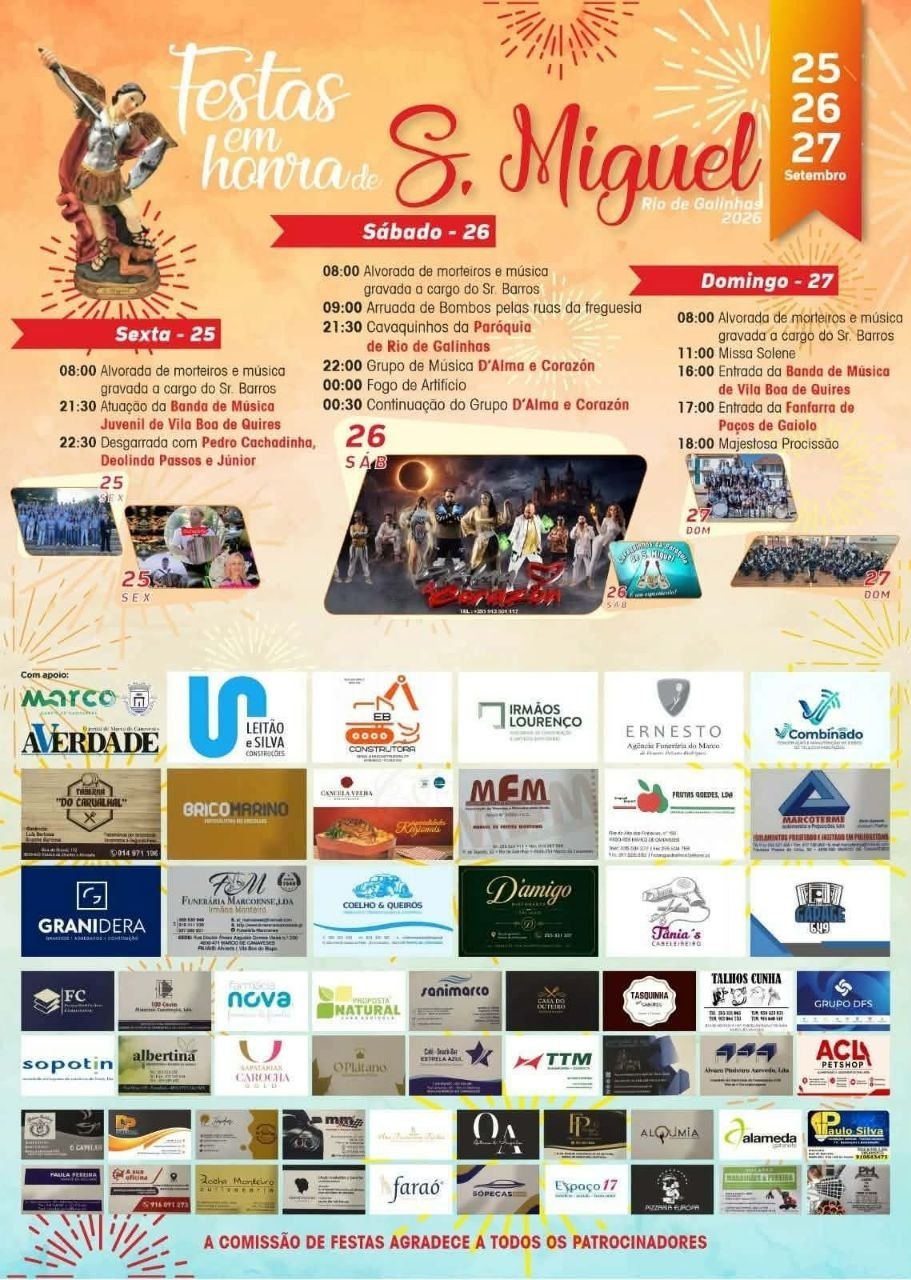
The traditions here are rooted in a sense of community, that spirit which brings neighbours and families together around culture, music and what those who came before left behind. There is a genuine care in promoting the heritage and in keeping the flame of togetherness alive, in not allowing modernity to erase the gestures, the memories and the pride of belonging to this land. It is that bond between generations, that desire to preserve and celebrate together, which gives Vila Boa de Quires e Maureles its truest character.
At the table, the land reveals itself as generous and straightforward. Anho no forno (slow-roasted lamb) reigns in these parts: tender meat, roasted with patience, which falls apart and fills the house with aromas on days of celebration and family gathering. And bacalhau (salted cod), that companion of every Portuguese table, is never absent, here prepared with the knowledge of those who inherited recipes and do not trade them for passing fashions. The cooking of this parish is built on the region's own produce, on age-old ingredients worked with respect, yielding dishes that taste of home, of slow fire and of sharing. To eat here is to be welcomed, to sit at the table of people who treat their guest as one of their own.
Vila Boa de Quires e Maureles is, at heart, a land of contrasts that complete one another: the ancient stone and the modern line, the unfinished manor and the festivals that renew themselves, the fields and the scattered houses, the old knowledge and the will to share it. It is a place for those who enjoy discovering slowly, who raise their eyes to a centuries-old church and, moments later, admire a work signed by a master. Those who pass through carry away in their memory strong flavours, the warmth of the people and that feeling of having been somewhere that knows who it is and where it comes from.