about the place
In the far south of the municipality of Vila Nova de Gaia, in the district of Porto, this union brings together the parishes of Sandim, Olival, Lever and Crestuma, which stretch across valleys and hillsides down to the banks of the river Douro. Crestuma and Lever descend to the river's edge, marked by the dam that stands there, while Sandim and Olival occupy higher, agricultural land, in a territory that blends countryside and riverside.
history
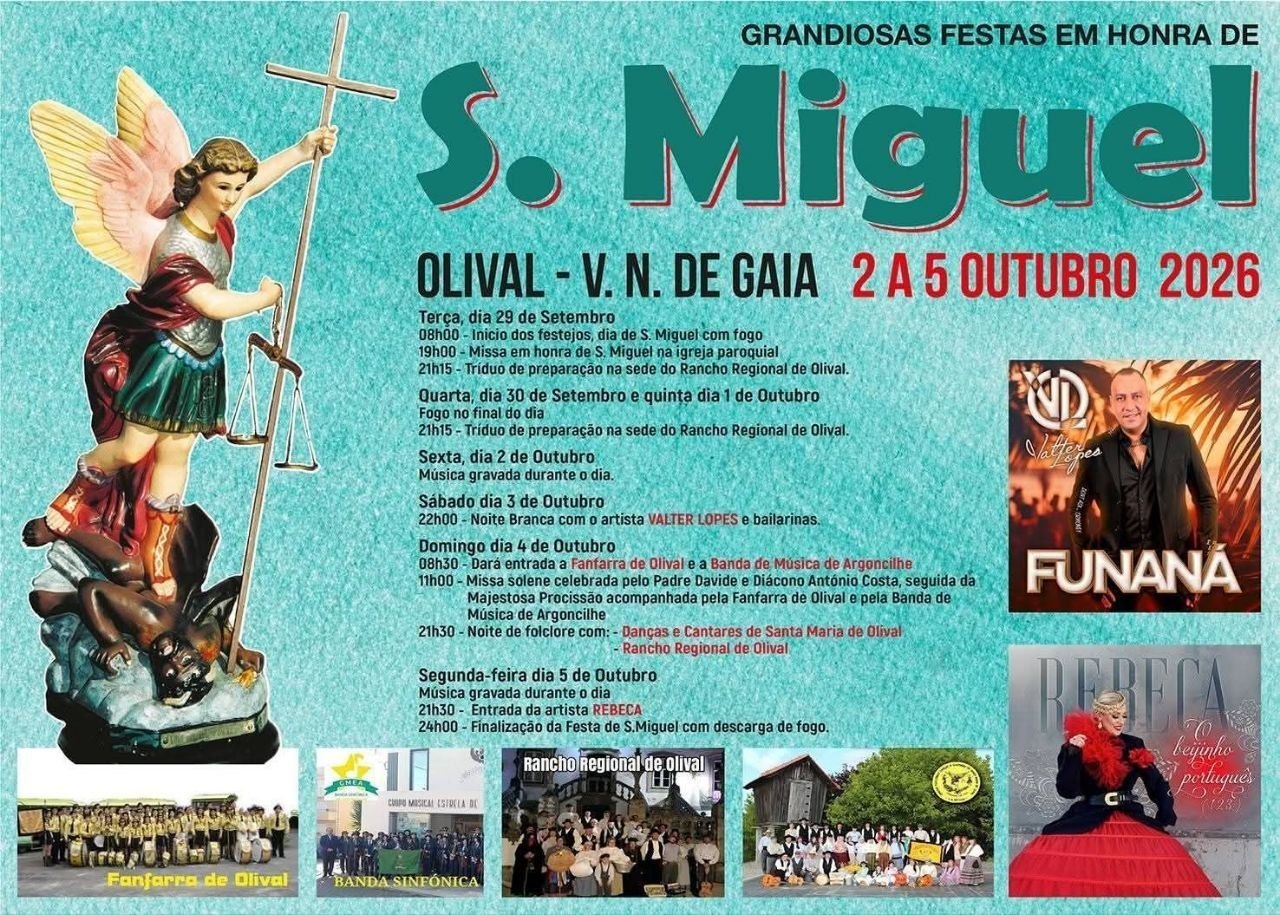
There are places known by a single name, and there are places that come in the plural. Sandim, Olival, Lever e Crestuma are four names that have learned to walk together, each with its own landscape, its own devotion and its own flavour, yet all children of the same stretch of Vila Nova de Gaia that slopes, unhurried, down towards the fields and the interior of the municipality.<p>Those who pass through here quickly realise that these are not picture-postcard places, but places of people who work, who pray and who gather around a table. These are villages where life has always kept its feet on the ground and its hands calloused, where houses cling to ancient streets and where, on Sundays, the sound of bells still rings out calling the faithful. The people of these places have built, over generations, a quiet and stubborn community — the kind that shuns fuss but guards with pride what it has inherited from its grandparents.<p>Religious heritage is, perhaps, the thread that best stitches these four localities together. In Crestuma stands the Igreja Matriz (parish church), dedicated to Santa Marinha, the devotional heart of the land and a meeting point for many generations who baptised their children there, celebrated marriages and bade farewell to their loved ones. It is one of those churches worth visiting not only for its stonework, but for the silence that settles inside and for the history the walls have steadily accumulated.<p>A little further on, the Capela de São Mateus de Arnelas (chapel) invites a slow pause. Small and secluded, it holds the memory of an ancient devotion and forms part of the soul of the place of Arnelas — one of those corners where faith is lived without grand gestures, in the daily lives of ordinary people. Those who wish to delve even deeper into the past of these lands will also find traces of a Benedictine monastery, remains that speak of times when monastic life set the rhythm of the fields and the people. These are stones that have resisted time and that continue to remind us that this stretch of Gaia had, from early on, a vocation of work, prayer and community.<p>To travel through Sandim, Olival, Lever e Crestuma is to learn to notice the detail: a chapel at the end of a path, a parish church dominating the rooftops, the remains of a monastery among the greenery. Each locality contributes its share to a whole that is, in the end, greater than the sum of its parts. There is no principal place and secondary ones here — there are four sisters, each with her own character.<p>The traditions of these villages live, above all, through the religious calendar and the pleasure of being together. Throughout the year, the people gather in honour of their saints and patron saints, fulfilling devotions that span generations and continue to bring together young and old alike. It is in these moments that the community recognises itself, that the streets come alive and that family and neighbourly bonds are strengthened. The popular summer celebrations and the winter festivities are part of this ancient rhythm, in which faith and festivity always go hand in hand, and in which no one is left out.<p>At the table, these lands hold true to the finest Portuguese tradition: honest cooking, made from fresh, local produce, without artifice. Grilled meats reign supreme here, with the scent of charcoal drifting across kitchen gardens and local eating houses. And there is one dish that deserves special mention — the posta de vitela (a generous veal steak), served tender and thick, the kind eaten with knife and fork but also with respect. It is food that satisfies and comforts, made to be shared with family and to accompany the long conversations that linger after a meal.<p>This appreciation for what the land provides is, at heart, the signature of these four localities: valuing the nearby product, what grows and is raised just around the corner, and turning it into a generous table. It is a cuisine without pretension, but with truth — much like the people who create it.<p>Sandim, Olival, Lever e Crestuma can, in the end, be summed up thus: ancient faith kept in chapels and parish churches, monastic memory hidden among stones, traditions repeated with affection, and a table where the posta de vitela and the charcoal grill tell the story of those who have always known how to live from what is theirs. Those who visit with an open heart leave wanting to return.